

What prompted me to write this article?
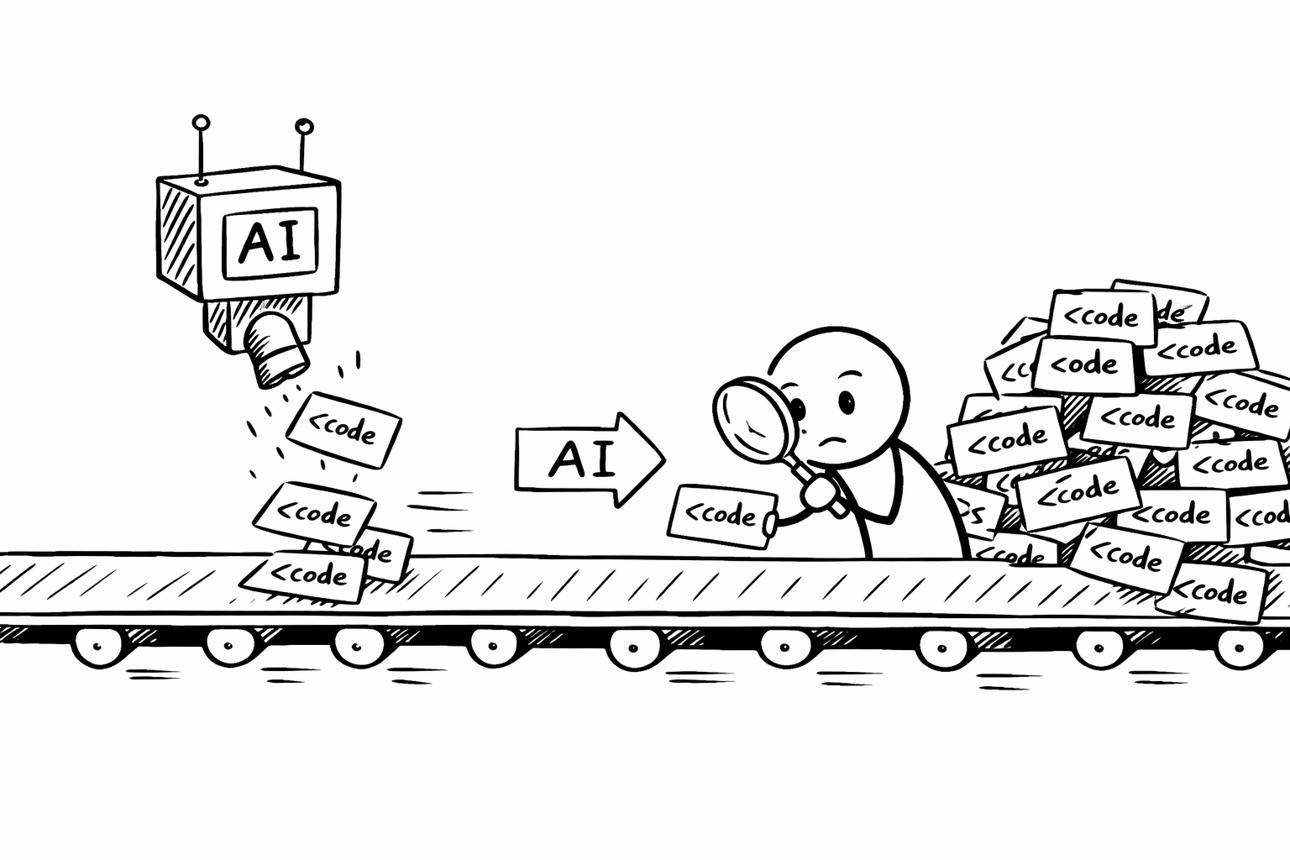
I recently came across a LinkedIn post shared by How I Use AI, crediting Clare Kitching, which highlighted a growing challenge in the workplace. The post referenced a Harvard Business Review article by Liz Fosslien and Mollie West Duffy, Managers Are Struggling to Keep Up with the AI Productivity Boom. The message was simple: AI has dramatically accelerated the production of work, but the time available to review, approve and manage that work hasn't increased at the same rate.
It immediately caught my attention. Having spent much of my professional life managing projects, coordinating teams and maintaining quality standards, I recognised the underlying problem. We're increasing the speed of execution without necessarily improving the processes that control it.
That observation prompted me to consider how the problem could be addressed through the work we're doing at AI PM Workflow.
The problem isn't productivity. It's the process.
The original post suggests four questions that teams should answer before moving work forward:
- What problem are we solving?
- What change are we trying to achieve?
- How will we measure success?
- Who is responsible?
I agree with the underlying principle. But I'd take it one step further. What happens after those questions have been answered?
We still need to manage the flow of information, maintain quality, control risk, assign responsibilities and ensure that decisions lead to meaningful outcomes. Simply generating more work, even when it is well-intentioned, doesn't necessarily create more value.
What if AI helped manage the work it creates?
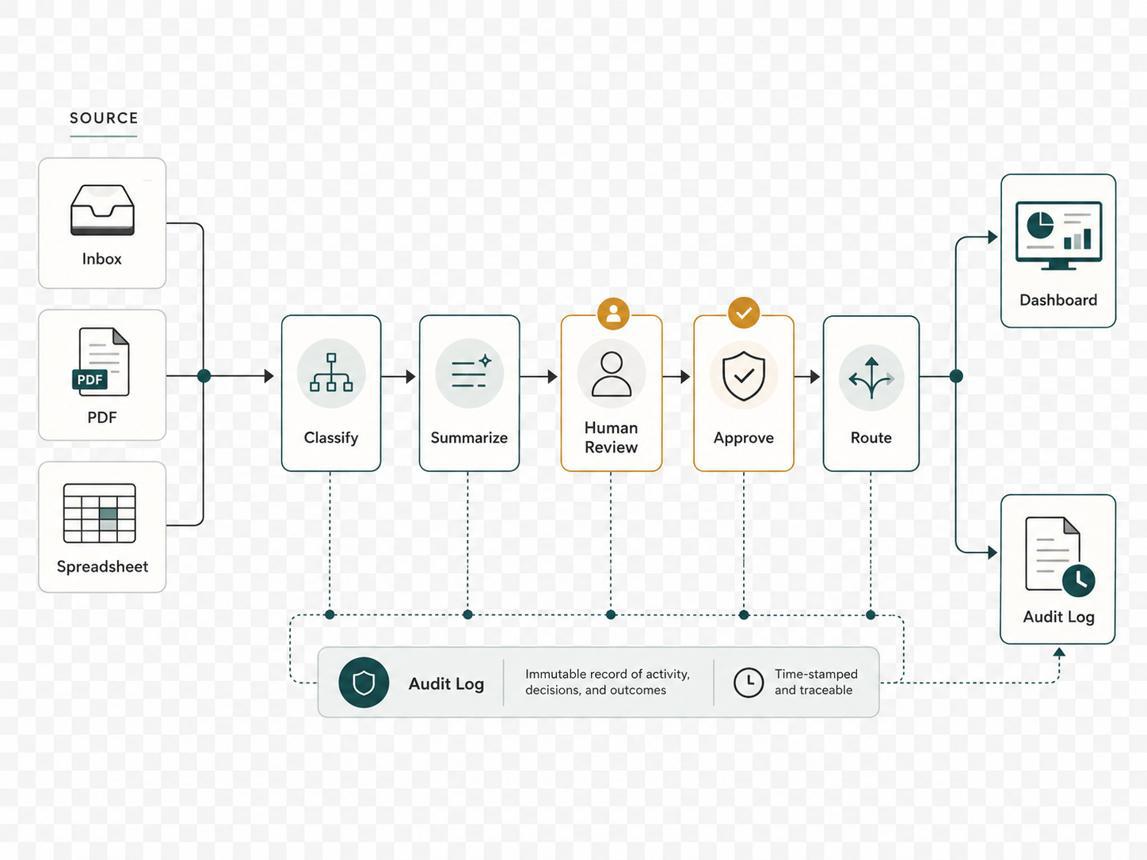
Rather than allowing every AI-generated document, recommendation or analysis to land on someone's desk for review, imagine introducing a structured management layer.
One that can:
- Capture and organise incoming work.
- Identify duplication and consolidate related information.
- Prioritise activities according to importance, urgency and risk.
- Check outputs against agreed quality standards.
- Prepare concise recommendations for human review.
- Route routine activities through predefined, controlled processes.
- Escalate exceptions and critical decisions to the appropriate people.
- Maintain a clear record of decisions, actions and accountability.
The objective is not to eliminate human involvement. It's to ensure human attention is directed towards the decisions that genuinely require it.
Not everything needs the same level of approval.
A practical approach could involve three levels of control.
Green, routine activities
Low-risk tasks that can be processed automatically within clearly defined boundaries, with appropriate monitoring and records.
Amber, review required
Activities where AI can prepare, validate and recommend, but a person must review and approve before proceeding.
Red, explicit authorisation
High-risk, contractual, financial or sensitive matters where human authorisation remains mandatory.
These boundaries would need to be agreed, tested and regularly reviewed. AI should support accountability, not undermine it.
The missing ingredient is workflow design.
This is where I believe organisations need to focus their attention. Before introducing more automation, we should examine the processes we're attempting to automate.
Are they necessary? Are responsibilities clearly defined? Are approval requirements proportionate to the risks? Can repetitive steps be eliminated? And, most importantly, how will we know whether the process is actually delivering better results?
Automating an inefficient process doesn't automatically make it effective. It can simply make the inefficiency happen faster.
Turning the idea into something practical
This thinking is directly relevant to AI PM Workflow, an initiative I'm developing together with my AI assistant, Izzy.
We're exploring how AI can support practical project management and business processes, with an emphasis on structure, traceability, quality control and meaningful human oversight.
The opportunity isn't simply to generate documents or complete individual tasks faster. It's to connect those activities into a coherent workflow where information is organised, responsibilities are clear and progress can be measured.
Our next challenge is to demonstrate that this approach can reduce unnecessary review effort without compromising quality, accountability or control. That requires practical testing, not just a compelling diagram.
From more output to better outcomes
The original illustration and accompanying discussion raise an important question about the future of AI in the workplace: are we using AI to become more effective, or simply to become busier?
I believe the real opportunity lies in redesigning how work moves from an idea to a completed, measurable outcome.
AI should not simply generate more work. It should help manage the work it generates.
That brings me back to the guiding principle behind AI PM Workflow: Keeping Focused on What Matters.
Because ultimately, the value of AI shouldn't be measured by how much work it creates. It should be measured by how much meaningful work gets completed.
Acknowledgements and references
This article was prompted by the LinkedIn post shared by How I Use AI, crediting Clare Kitching, and the discussion surrounding the original illustration.
The post references the Harvard Business Review article Managers Are Struggling to Keep Up with the AI Productivity Boom, by Liz Fosslien and Mollie West Duffy, published 25 May 2026.
AI PM Workflow
Keeping Focused on What Matters.
#ArtificialIntelligence #ProjectManagement #WorkflowAutomation #Leadership #AITransformation